Choosing the right publisher is an important step toward turning your manuscript into a real book. The top book publishing companies offer different options for authors, from traditional publishing and independent presses to hybrid publishing and self-publishing services. The best choice depends on your book’s genre, budget, goals, and how much help you need.
A good book publishing company can help with editing, book design, printing, distribution, and marketing, depending on its publishing model. However, not every company offers the same services, and some expect authors to cover certain costs.
When comparing publishing companies, authors should look beyond the price and consider the support, distribution, and rights offered by each publishing company. Exploring different book publication companies can also help writers understand which option best fits their needs.
In this guide, we’ll explore 15 publishing options in the USA, compare their main features, and explain how to choose the right one. Whether you’re writing your first novel, a children’s book, a business guide, or a memoir, this list will help you understand your options before making a decision.
KEY TAKEAWAYS
- Compare publishing models: The best publishing companies include traditional publishers, independent presses, hybrid publishers, and self-publishing service providers.
- Choose the right fit: Explore different book publication companies and select a publishing company that matches your genre, budget, and goals.
- Review costs and services: A reliable book publishing company should clearly explain its fees, royalties, distribution, and contract terms.
- Make an informed decision: Compare the best publishing companies and evaluate each publication company carefully before signing an agreement.
How We Selected These Publishing Companies
This list brings together well-known traditional publishers, independent presses, academic publishers, self-publishing platforms, and hybrid or author-service providers. The companies are not all direct competitors, so they should not be judged by exactly the same standards.
The main factors to consider are:
- Publishing model: Does the company use traditional, hybrid, or self-publishing arrangements?
- Reputation and publishing history: Does it have an established catalog and a clear record of publishing books?
- Genre coverage: Does it publish the type of book you have written?
- Distribution reach: Can it make books available through relevant retail and distribution channels?
- Editorial and production support: What editing, design, formatting, and production services are included?
- Marketing and publicity: What specific promotional activities does it offer or expect the author to manage?
- Author accessibility: Can writers submit directly, or do they need a literary agent?
- Rights and costs: Who owns the rights, how are royalties calculated, and are there upfront fees?
Submission policies, services, and contract terms can change. Authors should verify the latest details directly with each company before submitting a manuscript or signing an agreement.
Quick Comparison of the 15 Best Book Publishing Companies
| Publisher | Publishing model | Best for | Main genres | Author access | Pricing / Packages |
| Penguin Random House | Traditional | Authors seeking major-publisher reach | Fiction and nonfiction | Highly selective | Not publicly disclosed |
| Continental Publishers | Publishing services | Authors seeking publishing assistance | Verify current genre coverage | Direct inquiry | View publishing packages |
| HarperCollins | Traditional | Fiction and nonfiction authors | Multiple genres | Selective | Not publicly disclosed |
| Simon & Schuster | Traditional | Commercial and literary authors | Multiple genres | Selective | Not publicly disclosed |
| Hachette Book Group | Traditional | Authors matching its imprints | Multiple genres | Selective | Not publicly disclosed |
| Macmillan Publishers | Traditional | Fiction and nonfiction authors | Multiple genres | Selective | Not publicly disclosed |
| Scholastic | Traditional | Children’s and YA authors | Children’s and educational books | Selective | Not publicly disclosed |
| W. W. Norton & Company | Independent traditional | Literary, academic, and nonfiction authors | Fiction, nonfiction, education | Selective | Not publicly disclosed |
| Kensington Publishing | Independent traditional | Genre-fiction authors | Romance, mystery, suspense | Check current policy | Not publicly disclosed |
| Soho Press | Independent traditional | Literary and crime-fiction authors | Literary fiction, crime, YA | Selective | Not publicly disclosed |
| IngramSpark | Self-publishing platform | Independent authors | Most genres | Direct platform access | View pricing |
| BookBaby | Self-publishing services | Authors seeking production support | Most genres | Direct service inquiry | View pricing |
| Acorn Publishing | Hybrid | Authors seeking hands-on support | Verify current catalog | Direct inquiry | View publishing costs |
| Indigo River Publishing | Hybrid | Authors considering author-supported publishing | Verify current catalog | Direct inquiry | Not publicly disclosed |
| Manhattan Book Group | Hybrid/author services | Authors seeking publishing assistance | Verify current catalog | Direct inquiry | View publishing services |
Ready to Publish Your Book?
Turn your manuscript into a professionally prepared book with the right publishing support. Explore your options and find the services that fit your goals, budget, and publishing needs.
Publish Your Book Now
15 Top Book Publishing Companies to Consider in USA for Authors
1. Penguin Random House
Source: Penguin Random House
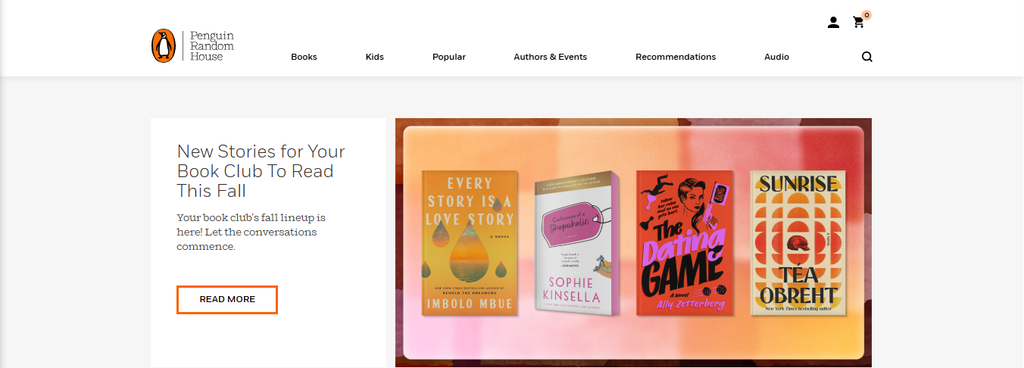
Penguin Random House is one of the major names in traditional book publishing. Its many imprints publish a wide range of fiction and nonfiction, including novels, biographies, memoirs, cookbooks, children’s books, and other subjects.
Its extensive publishing network and international reach make it an option for authors seeking an established publishing house. However, its size also means that competition can be intense, and the right imprint matters as much as the publisher’s name.
Best for: Fiction and nonfiction authors seeking traditional publishing.
Publishing model: Traditional publishing.
Notable genres: Fiction, nonfiction, biographies, children’s books, and cookbooks.
What makes it stand out: A large catalog, numerous imprints, and an established distribution network.
2. Continental Publishers
Source: Continental Publishers
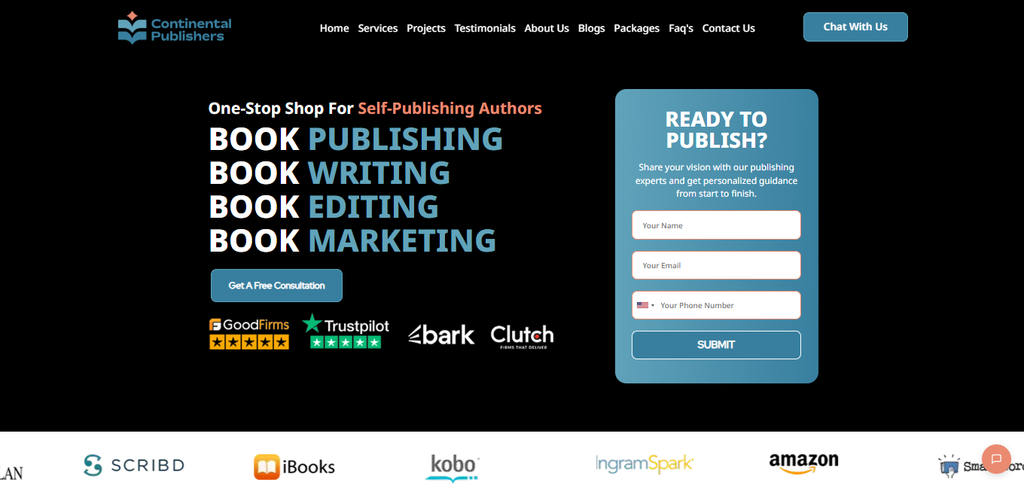
Continental Publishers is a publishing service provider for authors who want professional assistance with preparing and publishing their books. Its website presents services covering areas such as writing, editing, book design, publishing, and marketing.
These services may appeal to first-time authors who need guidance throughout the process. Before choosing a package, authors should confirm the exact deliverables, total costs, distribution arrangements, and rights they retain under the proposed agreement.
Best for: Authors seeking professional assistance with book preparation and publication.
Publishing model: Paid publishing services; confirm the terms of the selected package.
Notable genres: Fiction, nonfiction, memoirs, biographies, romance, and other categories listed by the provider.
What makes it stand out: A range of services intended to help authors manage multiple publishing tasks.
3. HarperCollins
Source: HarperCollins
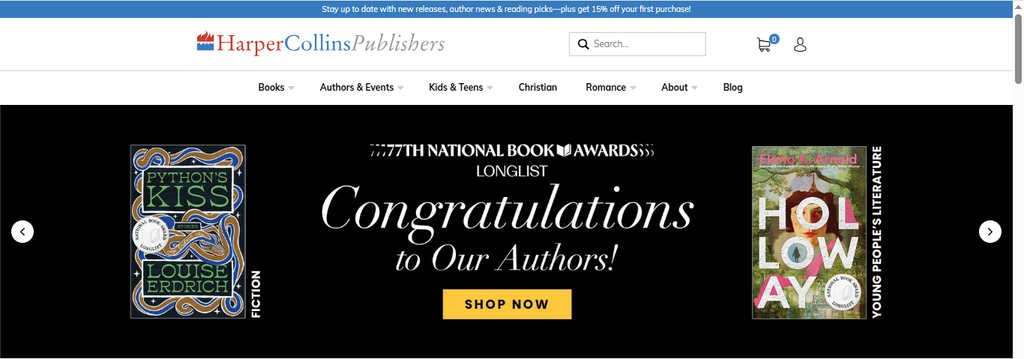
HarperCollins is a major traditional publisher with a broad catalog spanning commercial fiction, literary fiction, nonfiction, children’s books, biographies, and cookbooks. Its different imprints focus on distinct audiences and types of books.
This range makes it worth researching if your manuscript fits a clear category and you want to pursue a traditional publishing agreement. As with other large publishing houses, getting a book accepted is competitive, and authors should identify the right editorial team before submitting.
Best for: Authors pursuing traditional publication across multiple genres.
Publishing model: Traditional publishing.
Notable genres: Fiction, nonfiction, children’s literature, biographies, and business books.
What makes it stand out: A broad range of imprints and an established publishing network.
4. Simon & Schuster
Source: Simon & Schuster
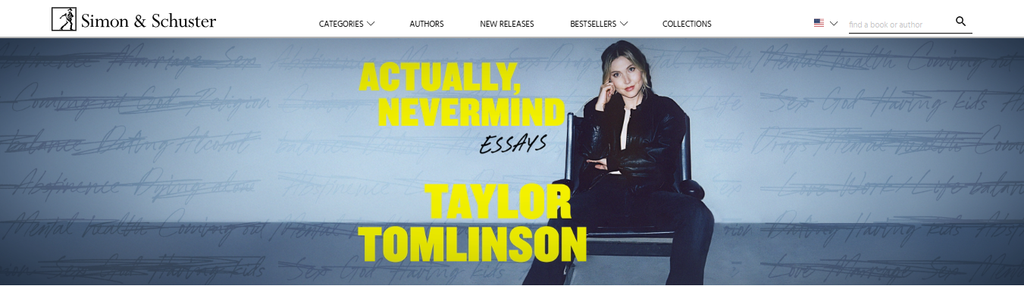
Simon & Schuster publishes books for a wide range of readers, including fiction fans, nonfiction readers, and children. Its imprints cover different subjects and writing styles, giving authors several areas to research when considering traditional publication.
The company is a recognizable name in the publishing industry, but authors need a strong manuscript or proposal that fits its editorial interests. Understanding its submission process is an important first step toward approaching the right publishing team.
Best for: Authors seeking a traditional publisher for commercial or literary books.
Publishing model: Traditional publishing.
Notable genres: Fiction, nonfiction, memoirs, biographies, and children’s books.
What makes it stand out: Multiple imprints serving different readers and publishing categories.
5. Hachette Book Group
Source: Hachette Book Group
Hachette Book Group publishes books across several categories, including commercial fiction, nonfiction, children’s literature, and specialist subjects. Its different publishing divisions help serve readers with varied interests.
Authors should explore its imprints rather than treating the company as one single publishing option. For writers seeking traditional publication, understanding the publisher’s catalog and editorial focus can help them decide whether their manuscripts fit. Submission policies and acquisition decisions vary across its divisions.
Best for: Authors pursuing traditional publication across a range of genres.
Publishing model: Traditional publishing.
Notable genres: Fiction, nonfiction, children’s books, and other specialist categories.
What makes it stand out: A broad publishing portfolio with multiple imprints.
6. Macmillan Publishers
Source: Macmillan Publishers
Macmillan Publishers is an established publishing group with imprints covering fiction, nonfiction, children’s books, and specialist subjects. Its catalog serves readers with different interests, from general readers to students and professionals.
Authors can use its range of imprints to identify teams that publish similar books. As with other major traditional publishers, acceptance is selective. A well-prepared manuscript, a clear proposal when required, and careful research can help authors approach the appropriate publishing division.
Best for: Fiction and nonfiction writers seeking traditional publishing.
Publishing model: Traditional publishing.
Notable genres: Fiction, nonfiction, children’s books, and specialist titles.
What makes it stand out: A range of imprints and publishing categories.
7. Scholastic
Source: Scholastic
Scholastic is widely known for publishing books for children and young readers. Its catalog includes children’s fiction, young adult literature, educational materials, and books used in school settings. Writers creating books for younger audiences may find its focus especially relevant.
However, children’s publishing requires a clear understanding of age groups, reading levels, and audience expectations. Authors should study the publisher’s existing titles and research the appropriate submission route before sending a manuscript.
Best for: Children’s authors, young adult writers, and educational content creators.
Publishing model: Traditional publishing.
Notable genres: Children’s books, middle-grade fiction, young adult literature, and educational titles.
What makes it stand out: A strong focus on young readers and educational audiences.
8. W. W. Norton & Company
Source: W. W. Norton & Company
W. W. Norton & Company is an independent publisher known for literary works, nonfiction, and educational books. Its catalog includes books for general readers as well as students and professionals.
Authors whose work relies on careful research, strong ideas, or a distinctive literary voice may find its catalog useful when researching potential publishers. As with any traditional publishing option, authors should assess the company’s editorial interests and confirm whether their subject and manuscript suit its current publishing plans.
Best for: Literary writers, nonfiction authors, and some educational writers.
Publishing model: Independent traditional publishing.
Notable genres: Literary fiction, nonfiction, educational books, and academic-related titles.
What makes it stand out: An independent publishing identity and a diverse intellectual catalog.
9. Kensington Publishing

Source: Kensington Publishing
Kensington Publishing is an independent publisher with a strong presence in commercial fiction. Readers may know its catalog for genres such as romance, mystery, suspense, and historical fiction, alongside selected nonfiction.
Authors who write within established genre categories may find it useful to investigate Kensington’s imprints and current interests. Before submitting, compare your manuscript with recent releases and check the company’s current requirements, since acquisition policies and genre priorities can change.
Best for: Authors writing commercial and genre fiction.
Publishing model: Independent traditional publishing.
Notable genres: Romance, mystery, suspense, historical fiction, and other popular fiction categories.
What makes it stand out: A strong focus on commercial fiction and genre readers.
10. Soho Press
Source: Soho Press
Soho Press is an independent publisher known for an editorial identity that includes literary fiction and crime writing, along with selected young adult titles. It may suit authors whose manuscripts have a clear voice and align with the types of books the press already publishes.
Rather than submitting simply because it is an independent publisher, study its recent releases and consider how your work fits its audience. Its selective approach means a thoughtful, targeted submission is important.
Best for: Authors writing literary fiction and crime-focused stories.
Publishing model: Independent traditional publishing.
Notable genres: Literary fiction, crime fiction, mysteries, and selected young adult titles.
What makes it stand out: A distinctive catalog and a recognizable focus on literary and crime writing.
11. IngramSpark
Source: IngramSpark
IngramSpark differs from a traditional publishing house because it provides a platform for authors and publishers to produce and distribute books. Its services support print-on-demand publishing and book availability through distribution channels, depending on the selected setup and terms.
This can be useful for independent authors who want to retain control over their projects. However, using a distribution platform does not guarantee that bookstores will stock a title or that readers will discover it.
Best for: Independent authors who want control over production and distribution.
Publishing model: Self-publishing platform.
Notable genres: Fiction, nonfiction, children’s books, and other book categories.
What makes it stand out: Print-on-demand options and access to book distribution channels.
12. BookBaby
Source: BookBaby
BookBaby offers publishing services designed to help independent authors prepare and release books. Depending on the package and services selected, support may include editing, cover design, formatting, printing, and digital distribution.
This can be useful for writers who want professional help without pursuing a traditional publishing contract. The exact value depends on what is included in the agreement, so authors should compare the total cost with hiring freelancers or managing parts of the process themselves.
Best for: Authors seeking professional help with self-publishing.
Publishing model: Self-publishing services.
Notable genres: Fiction, nonfiction, memoirs, business books, and other categories.
What makes it stand out: Multiple services that can help authors manage book production.
13. Acorn Publishing
Source: Acorn Publishing
Acorn Publishing is an option for authors exploring hybrid publishing and hands-on publishing support. Hybrid arrangements can provide professional help with parts of the book production process while requiring the author to make a financial investment.
The exact services, costs, and rights depend on the agreement. Authors considering Acorn should review its current offerings carefully and compare them with other providers before deciding whether the proposed support justifies the price.
Best for: Authors considering guided publishing with professional support.
Publishing model: Hybrid publishing; confirm current terms directly.
Notable genres: Check the company’s current catalog for suitable genres and categories.
What makes it stand out: An option for authors exploring a supported alternative to traditional publishing.
14. Indigo River Publishing
Source: Indigo River Publishing
Indigo River Publishing is another provider authors may investigate when comparing hybrid publishing options. A hybrid arrangement can involve a combination of professional publishing services and author funding, but the details differ between companies and agreements.
Before choosing this route, writers should understand exactly what they are paying for and what responsibilities remain theirs. A clear contract should explain the publisher’s obligations, the author’s rights, and how sales revenue is handled.
Best for: Authors exploring professional publishing support.
Publishing model: Verify the current model and contract terms directly.
Notable genres: Check its current catalog and services for relevant categories.
What makes it stand out: An option to compare when researching supported publishing routes.
15. Manhattan Book Group
Source: Manhattan Book Group
Manhattan Book Group offers an author-services route for writers who want assistance with the publication process. Depending on the current package and agreement, services may include editing, book design, production, distribution, and promotional support.
This model differs from traditional publishing, where the publisher generally selects manuscripts and funds standard production costs. Authors considering Manhattan Book Group should focus on the actual services and contractual commitments rather than relying only on broad promises of support.
Best for: Authors who want professional guidance throughout the publishing process.
Publishing model: Hybrid publishing, confirm the current agreement and terms.
Notable genres: Check the publisher’s current catalog for genre suitability.
What makes it stand out: An option for authors comparing guided publishing services.
Need Help Bringing Your Book to Life?
From editing and cover design to formatting and publishing support, choosing the right services can make the process easier. Explore available publishing packages and understand what’s included before making your decision.
Explore Publishing ServicesTypes of Book Publishing: Traditional, Independent, Hybrid, and Self-Publishing
Before choosing a publisher, it is essential to understand how to publish a book and the main ways books reach readers. These models differ in who pays for production, who controls the process, and how authors earn money.
Traditional Publishing
In traditional publishing, a publisher selects a manuscript and generally pays the standard costs of editing, design, production, and publication. Some authors receive an advance against future royalties, while others may have different contract arrangements. The publisher typically manages production and may provide sales, distribution, and publicity support.
The main benefit is access to professional publishing resources without paying the publisher’s normal production costs upfront. The challenge is that acceptance is competitive, timelines can be long, and authors usually have less control over decisions such as cover design, release dates, and pricing.
Independent Publishing
Independent presses are publishing houses that operate outside the largest corporate publishing groups. They may focus on particular genres, literary styles, communities, or specialist subjects. Some use traditional contracts, meaning they select manuscripts and fund standard publishing costs.
An independent press can be a good match when its catalog aligns closely with your book. However, independent publishers vary in size, distribution reach, marketing budgets, and submission policies. Always assess the specific press instead of assuming that every independent publisher offers the same benefits.
Hybrid Publishing
Hybrid publishing combines elements of traditional publishing and author-funded services. An author may contribute financially while receiving professional help with editing, cover design, production, distribution, or marketing.
This route may suit writers who want more support than they can manage alone but do not want to handle every publishing task themselves. However, paying a company does not automatically guarantee quality or sales. Ask what each fee covers, who owns the copyright, how royalties work, and whether the company has a clear record of publishing books successfully.
Self-Publishing
Self-publishing gives authors control over the publishing process. Writers can choose their editors, designers, platforms, prices, and release dates. They can also retain more control over their rights, depending on the agreements they sign with service providers and distribution platforms.
The trade-off is responsibility. Authors usually need to arrange editing, design, formatting, marketing, and distribution themselves or pay professionals to help. Self-publishing can be a strong option for writers who want flexibility and are prepared to manage the business side of releasing a book.
Book Publishing Cost Breakdown
| Service | Traditional Publishing | Self-Publishing/Aggregator | Hybrid Publishing |
| Editing | Usually covered | $300–$3,000+ | Included in package or charged separately |
| Cover Design | Usually covered | $200–$2,000+ | Included in package or charged separately |
| Formatting | Usually covered | $100–$500+ | Included in package or charged separately |
| ISBN Registration | Usually covered | $0–$125+ | Included or charged separately |
| Distribution | Usually included | Free distribution options or setup fees | Usually included in the package |
| Marketing/Promotion | Varies by publisher | $0–$5,000+ | Depends on the package |
| Upfront Costs | Usually $0 for the author | Varies by services selected | Often several thousand dollars |
| Royalties | Contract-dependent | Often a higher share per sale | Contract-dependent |
Note: These are general estimates, not fixed prices. Actual costs depend on the publisher, book length, services selected, and contract terms. Hybrid publishers may charge substantial upfront fees, so authors should review the contract and expected deliverables carefully.
Traditional vs. Independent vs. Hybrid vs. Self-Publishing: Comparison
| Aspect | Traditional Publishing | Independent Publishing | Hybrid Publishing | Self-Publishing |
| Credibility | Strong recognition from established publishers | Depends on the publisher’s reputation | Depends on the provider’s track record | Depends on book quality, reviews, and author reputation |
| Editorial Quality | Usually professionally managed by the publisher | Varies by publisher | Depends on the services included | Varies based on the professionals hired |
| Speed | Slow and often takes months or longer | Varies by publisher and schedule | Depends on the provider and production timeline | Often faster because the author controls the schedule |
| Creative Control | Limited because the publisher shares key decisions | Shared with the publisher under contract | Varies by contract and author involvement | High because the author makes most decisions |
| Upfront Costs | Usually no standard publishing production fees | Usually none under a traditional contract | Authors commonly contribute financially | Author pays for selected services and production |
| Royalty Rates | Set by contract and may include an advance | Set by contract and varies by publisher | Depends on the agreement | Depends on the platform, format, price, and fees |
| Marketing | Publisher may provide marketing and publicity support | Varies by publisher and title | Depends on the package and contract | Mostly managed by the author or hired professionals |
| Distribution | May include established bookstore, library, and online channels | Depends on the publisher’s distribution network | Depends on the provider’s arrangements | Online distribution is common, but bookstore stocking is not guaranteed |
How to Choose the Right Book Publishing Company
If you are unsure where to begin, learning how to write a book and researching book publishing services can help you understand the support available for editing, cover design, formatting, printing, and distribution.
Our guide on how to publish a book in 2026 can also help you explore the main steps involved in preparing and releasing your manuscript.
Start With Your Publishing Goals
First, decide what matters most to you. Do you want the prestige and professional structure of traditional publishing? Do you want to publish quickly? Is creative control your priority? Are you willing to invest in services to get more hands-on help?
Write down your top three goals before comparing companies. This makes it easier to eliminate options that do not fit your needs.
Check Whether the Publisher Fits Your Genre
Look at the books a company has released recently. If you write romance, research publishers with a clear romance catalog. If you write a business book, explore companies that publish business, leadership, or professional titles.
A publisher’s existing catalog can reveal its audience, editorial interests, and typical book formats. A company may have an excellent reputation but still be the wrong choice for your particular manuscript.
Understand the Submission Requirements
Traditional publishers may require a literary agent, while some independent presses accept submissions directly during specific periods. Requirements can include a query letter, synopsis, sample chapters, a complete manuscript, or a nonfiction book proposal.
Follow each publisher’s guidelines carefully. Sending the wrong materials or submitting through an unaccepted route can hurt your chances. Never assume that one company’s process applies to all the others.
Compare Distribution and Marketing Support
Ask how the company makes books available to readers. Does it supply books to retailers and libraries? Does it support ebook and audiobook formats? Does it have a clear marketing plan for your title?
Remember that distribution does not guarantee bookstore placement. A book may be available for bookstores to order without being stocked on shelves. Similarly, a general promise of marketing support is less useful than a written list of actual services and responsibilities.
Before making your final choice, compare several publishing companies and review what each publishing company promises to deliver. This can help you identify a provider that matches your book’s goals and budget.
Understand Rights, Royalties, and Contract Terms
Before signing, read the agreement carefully. Check who owns the copyright, which formats and territories are covered, how royalties are calculated, and when payments are made.
Also review audiobook, translation, ebook, and other rights where relevant. Find out how long the company controls those rights and what happens if your book goes out of print or sales decline. A clear contract should explain how rights can return to the author and under what conditions.
Look Carefully at Upfront Fees
Traditional publishing generally does not ask authors to pay the publisher’s ordinary production costs. Hybrid publishers and service providers may charge fees, so compare the price with the exact services included.
Ask for a written quote that separates editing, design, printing, distribution, marketing, and any additional charges. Be cautious about paying large sums before understanding the contract, deliverables, and realistic sales expectations.
When comparing book publication companies, check whether the quoted price covers all the services you need. The right book publishing company should provide clear information about fees and deliverables, while a trustworthy publication company should explain its terms before you commit. Researching the best publishing companies can help you compare your options more confidently.
Which Type of Publisher Is Best for Different Authors?
Different writers have different needs. Use the table below as a starting point rather than a guarantee that one publishing route will suit everyone.
| Author type | Potentially suitable option | Why it may fit |
| First-time novelist | Traditional, independent, or hybrid publishing | The best route depends on manuscript fit, budget, and desired support. |
| Children’s book author | Children’s-focused publisher | Specialized experience with young readers may be valuable. |
| Romance author | Genre-focused publisher | A suitable catalog can help the book reach its intended audience. |
| Academic author | Academic or professional publisher | Specialist editorial and distribution channels may fit the subject. |
| Entrepreneur writing a business book | Traditional, hybrid, or self-publishing | The choice depends on the audience, timeline, and business goals. |
| Author wanting maximum control | Self-publishing | The author controls most production and release decisions. |
| Author seeking major industry reach | Traditional publishing | An established publisher may offer broad distribution and professional support. |
| Author wanting hands-on assistance | Hybrid or service-based publishing | Paid services may help with production, but contracts and costs need careful review. |
Before making your choice, compare the companies that match your needs and read their current terms. The best option is the one that fits your project, not simply the one with the most recognizable name.
Take the Next Step Toward Publishing Your Book
Every author deserves a publishing plan that matches their vision. Explore professional publishing assistance, compare available services, and take the next step toward sharing your story with readers.
Get Started TodayFinal Thoughts
Choosing among the top book publishing companies in the USA starts with understanding your goals, budget, and publishing needs. Traditional publishers offer established networks, independent presses may suit specific genres, and self-publishing provides greater creative control. Hybrid publishers and service providers offer additional support, often for a fee.
Before signing a contract, compare submission requirements, editing, distribution, marketing, royalties, rights, and upfront costs. Review each company’s services carefully, as a well-known name does not guarantee book sales or bookstore placement.
If you are researching a book publishing services company, compare its packages, costs, and contract terms with other available options. You can also explore Continental Publishers for publishing-related assistance. Confirm its current services, pricing, and rights arrangements before making a decision.
Ultimately, the right publishing partner should match your manuscript, budget, and expectations while helping you move confidently toward your publishing goals.
Frequently Asked Questions
Some of the best book publishing companies include Continental Publishers, Penguin Random House, HarperCollins, Simon & Schuster, and Macmillan Publishers. The right choice depends on your publishing goals, budget, book genre, and the level of support you need. Traditional publishers are suitable for authors seeking established publishing networks, while Continental Publishers offers publishing services for authors who want assistance bringing their books to market.
The cost of publishing a book typically ranges from $0 to $5,000 or more, depending on the publishing method and services required. Traditional publishers generally cover publishing costs for books they accept, while self-publishing can cost around $500 to $5,000+ for editing, cover design, formatting, and marketing. Hybrid publishers may charge several thousand dollars or more for their packages. Authors should compare costs, royalties, and included services before choosing a publishing company.
Five book publishing companies worth considering are Continental Publishers, Penguin Random House, HarperCollins, Simon & Schuster, and Macmillan Publishers. Penguin Random House and HarperCollins are well-known traditional publishers, while Simon & Schuster and Macmillan offer books across various genres through their publishing imprints. Continental Publishers provides publishing services for authors seeking assistance with the publishing process. The best choice depends on whether you prefer traditional publishing or want to explore paid publishing services.
Getting a book published can be challenging, especially through traditional publishers, which receive many submissions and select manuscripts that fit their publishing goals. Authors may need to improve their manuscripts, prepare a strong book proposal, research suitable publishers, and find a literary agent. Self-publishing and publishing service providers offer alternative options, but authors still need a well-prepared manuscript, a realistic budget, and an effective marketing plan to give their books the best chance of success.
First-time authors can start by completing their manuscripts and reviewing them carefully before arranging professional editing. Next, they should research publishers that accept their genre and prepare a book proposal or submission package if required. Authors can submit their work to traditional publishers or literary agents, publish independently through platforms such as IngramSpark, or explore publishing services offered by companies like Continental Publishers. Before signing a contract or purchasing a package, authors should review the costs, rights, royalties, distribution options, and services included.
Common book publishing mistakes include skipping professional editing, choosing an unsuitable publisher, overlooking contract terms, setting an unrealistic budget, and neglecting marketing. Authors should also avoid paying for publishing services without understanding what the package includes. Before choosing a company, compare its services, distribution options, royalty terms, and reputation. Reviewing these details carefully can help authors make informed decisions and avoid unnecessary expenses.
The book publishing industry faces several challenges, including rising production costs, growing competition, changing reader habits, and the difficulty of helping new books stand out in a crowded market. Publishers and authors must also adapt to digital reading trends, online retail changes, copyright concerns, and the growing use of artificial intelligence. Marketing and distribution remain important challenges because even well-written books can struggle to reach their target audiences without effective promotion and visibility.
The three commonly recognized types of book publishing are traditional publishing, self-publishing, and hybrid publishing. In traditional publishing, a publisher selects a manuscript and generally covers standard production and distribution costs in exchange for contractual rights. In self-publishing, authors manage the process themselves or hire professionals and usually pay the associated expenses. Hybrid publishing combines author investment with publishing services, although the costs, rights, royalties, and level of support vary by company. Understanding these options helps authors choose a publishing method that fits their budget, creative goals, and expectations.