The hardest part of writing is believing anyone will read past Chapter One…
If you believe that writing a book means staring out a rain slicked window sipping tea until divine inspiration strikes, we have bad news for you. That is a fantasy created by Hollywood.
Real manuscript production is a grit testing, mechanical grind that demands systematic execution.
Almost every other day Continental Publishers deals with hopeful authors crash into writer block because they lack structural discipline. Mastering how to start writing a book requires clear workflows, aggressive drafting habits, and professional guidance.
Whether you plan to self publish or seek traditional distribution, our premier book writing services give you the technical roadmap needed to convert vague ideas into bound print editions.
In this blog post, we at Continental Publishers would like to share some insights on How to Write a Book.
With our eleven years of experience in book writing and working with ebook authors, we hope to provide you with all the helpful information you may need.
KEY TAKEAWAYS
- Pick an idea that holds your interest for 60,000 words and has a specific reader in mind.
- Set a daily word count and a finish date. Fiction runs 70,000 to 90,000 words and nonfiction runs 50,000 to 70,000.
- Follow one structure and draft without editing so you can build momentum.
- Edit it in full passes, three for fiction and four for nonfiction and work from big problems to small ones.
- Test the manuscript with five to ten beta readers from your genre.
- Choose Amazon exclusivity or wide distribution on purpose and read current platform terms first.
WHY NEW WRITERS STRUGGLE TO FINISH THEIR FIRST BOOK?
Talent rarely stops a first book. Habits, expectations, and blind spots about the business do. Read the list below and mark every line that sounds like you. Each step later in this guide answers one of them.
- Haven’t lived enough yet to write with real depth.
- Think they’re already good enough to be discovered overnight.
- Treat their first draft as the finished book.
- Haven’t read enough to develop a real sense of craft.
- Haven’t written enough books to build real skill.
- Want to have written a book more than they want to write one.
- Their basic writing craft simply isn’t there yet.
- Don’t understand the business side of publishing.
Your Manuscript Deserves More Than a Folder on Your Desktop
Stop letting your draft collect digital dust. Continental Publishers turns your raw ideas into polished, high-selling titles ready for global retail shelves. Claim your place in print.
Publish With Us TodayFIND YOUR INSPIRATION
Step into the author’s seat and master the art of writing a book, covering every stage from brainstorming initial ideas and outlining chapters to drafting, editing, and publishing your work.
Every book starts as a question you cannot stop asking. Ideas come from what you see, hear, and argue about, not from staring at a blank page. Keep an idea file on your phone and add to it daily.
Capture overheard lines, odd news stories, your own mistakes, and expertise that other people already pay you for. Volume matters here because most ideas fail the test. A few survive.
Run every survivor through three checks. Does it hold your interest for 60,000 words or more? Can you describe it in one sentence? Does a specific reader want it? An idea that passes all three earns a manuscript.
An idea that fails any of them earns a note in your file and nothing more. Nonfiction authors add a fourth check. Can you show why readers should trust you on this subject? Credentials, results, and years of hands on work all count.
Look Around Yourself for New Ideas.
Ideas hide in ordinary places. Scan your job, your family history, your commute, and the arguments you keep having with strangers online.
Nonfiction writers should list the questions clients ask them most.
Fiction writers should list the situations that keep them awake at night.
Collect ten raw ideas per week, then rank them each Friday by curiosity. Cut anything that leaves you lukewarm.
Write What You Find Interesting and Love.
You will spend hundreds of hours with this manuscript, so boredom kills it faster than any critic. Choose a subject or story you would happily explain at a dinner table for an hour.
Trends shift while you write, but your enthusiasm shows on every page. Passion never replaces skill, yet it carries you through the weeks when your skill has not caught up.
MAKE YOUR WRITING SPACE

Your brain links places to habits. Give it one location that means writing and nothing else. A corner desk, a kitchen chair at six in the morning, or a library table all work. Skip the sofa, because your brain files the sofa under television.
Pick a time as well as a place. A fixed hour removes the daily debate about whether you feel like writing. Consistency trains focus faster than willpower ever will.
Then remove friction. Set out your laptop, notebook, and water glass the night before, so you start the next day without hunting for anything. Silence notifications and close every tab that is not the manuscript.
Tell your household your writing hours and treat them like a client meeting. You would not cancel on a paying client, so do not cancel on your book. A dull, reliable setup beats a beautiful, unused one.
Make a Specific Place for Your Writing
Choose a spot you can reach in under a minute and control without asking anyone. If you share a home, wear headphones or hang a sign as a signal.
Set the desk height and chair for comfort, because a sore back shortens sessions. If you cannot claim a room, claim a time slot and a single seat in a library or café, and use it every day.
Gather Your Writing Tools Together
Pick one word processor and stay with it. Microsoft Word, Google Docs, and Scrivener all handle book length files.
Back up every session in two places, one cloud copy and one external drive, so a crashed laptop never erases months of work.
Keep a notebook for ideas that arrive away from the desk, and use a timer for 25 minute sprints with five minute breaks.
WRITE THE BOOK (You are welcome)
Drafting is where beginners either build momentum or quit. Your job in this phase is simple. Produce words, follow a structure, and refuse to polish anything. Most of your first draft will change, so speed beats elegance.
Every answer to how to write a book comes down to the same three habits. Show up on schedule, follow a structure, and finish.
Do the math before you start. Divide your target word count by your daily goal and you get a finish date. Write 1,500 words a day and an 80,000 word novel takes about 54 writing days.
Stephen King describes a daily quota of 2,000 words in On Writing. Pick your own quota and defend it.
Professionals write books in scheduled sessions, not in bursts of inspiration, and you should copy that habit from day one.
The twelve steps below cover method, research, audience, voice, structure, and endurance:
Find Your Writing Method
If you wonder how to start writing a book, pick a method before you pick a first sentence.
Plotters outline every scene first. Discovery writers start from a situation and find the story as they go. Most people land somewhere in between.
Test each approach with a 5,000 word trial and keep the one that produces more words with less dread. Nonfiction writers should always outline chapters first.
Do Your Research
Research like an investigator. Verify facts from primary sources such as interviews, court records, and original documents before you trust summaries. Log each source in a spreadsheet with the date you checked it.
Fiction needs accuracy too, because readers punish wrong details. Andy Weir posted The Martian online chapter by chapter, and readers flagged science errors he then fixed.
Research lightly before you draft, then bracket gaps and keep writing.
Write for the Reader
Your reader is not you. Define one specific person, including what they know, what they want, and what they fear.
Then test every chapter against one question.
What does this reader gain here? Cut passages that only serve your ego. Nonfiction readers want a result. Fiction readers want an experience. Both want clarity on page one.
Find Your Writing Voice
Voice comes from repetition, not from a formula. Write the way you talk when you explain something you care about, then tighten it. Read your draft aloud and mark every line where you sound like someone else.
Rewrite those lines.
Read widely in your genre, because you absorb rhythm from what you read. Imitating a favorite author for a page or two is a legitimate way to learn.
Use a Three Act Structure
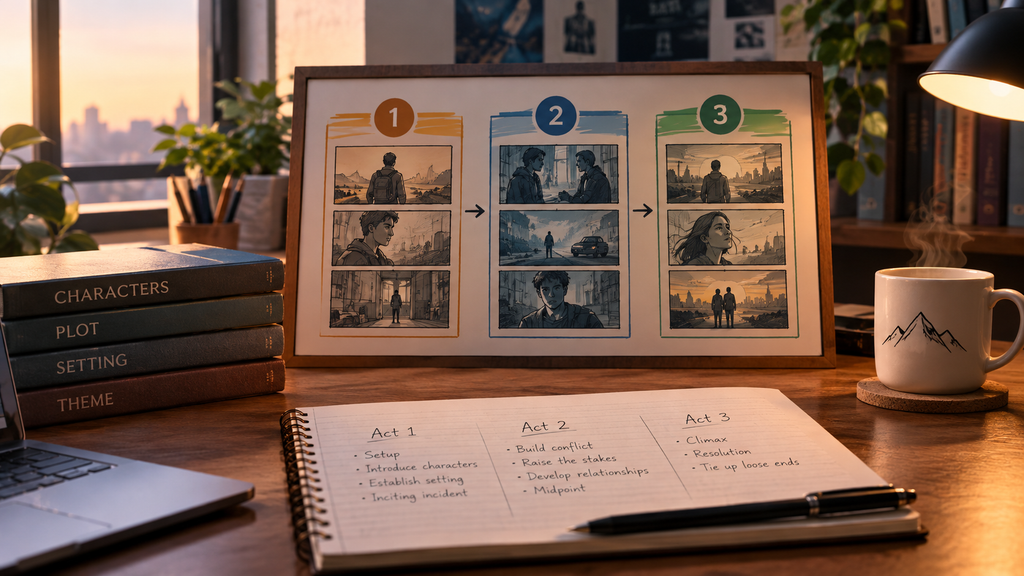
Popular plot models rework one shape, the three act structure.
Act 1 covers setup, with exposition, the inciting incident, and Plot Point One.
Act 2 covers confrontation, with rising action, the midpoint, and Plot Point Two.
Act 3 covers resolution, with the pre climax, the climax, and the denouement.
The Hero’s Journey, Save the Cat, and Harmon’s Story Circle slice the same shape into more beats.
Craft a Strong Opener
Your first page decides whether a reader keeps going. Open with a person wanting something, a problem already in motion, or a question the reader must answer.
Skip weather reports, waking up scenes, and long backstory. Nonfiction openers work best with a specific story or a hard number that frames the problem.
Write the opening last if it blocks you, because you will know your book better by then.
Add Conflict and Tension
Conflict means a character wants something and something blocks it. No conflict, no story.
Raise tension by shrinking the time, raising the cost of failure, or forcing a choice between two things the character values.
Nonfiction has conflict too, in the gap between the reader’s current problem and the result they want. Give every scene a goal, an obstacle, and an outcome that changes something.
Space Out Your Story Beats Effectively
Beats are the moments where the story turns. Cluster them and the reader gets whiplash. Spread them too thin and the middle sags.
Blake Snyder’s Save the Cat beat sheet puts the catalyst near 10 percent of the story and the midpoint at 50 percent.
Mark those two points on your outline, then place your other turns between them. Treat the percentages as checkpoints, not a cage.
Make Cause and Effect Chains
Trey Parker and Matt Stone gave film students a simple test. Between any two scenes, you should be able to say “therefore” or “but,” never “and then.”
Write a one line summary of each scene and join them with those words. If “and then” is the only connector that fits, the scenes are just events, so rework them.
Nonfiction chapters chain the same way, with each one answering the question the last one raised.
Turn Off Your Internal Editor
Your internal editor interrupts drafting to fix one sentence, and that habit wrecks momentum.
Anne Lamott defends the terrible first draft in Bird by Bird for exactly this reason. Set one rule, no deleting during a session.
Type through mistakes and mark weak spots with a bracket or the letters XXX. Run 25 minute sprints. Fix everything later, in the editing pass where fixing belongs.
Push Through the Middle
Writing a book gets hardest in the middle, where the opening energy fades and the ending sits far away. Reread your outline and your first chapter to recover your direction.
Write the scenes you feel eager to write, even out of order, then bridge the gaps. Raise the stakes at the midpoint so the story changes direction.
Hit your daily goal, even if that means 300 words on a bad day.
Write an Unforgettable Ending
Your ending must deliver what your opening promised. In fiction, the climax forces the protagonist to use what they learned, and the denouement shows what changed.
In nonfiction, close with the reader’s next action, not a recap. Write the ending scene as soon as you know it, then draft toward it.
Readers remember endings, so give this section real revision time.
MANUFACTURE ACCOUNTABILITY TO HELP YOU FINISH
Motivation fades by week three. Accountability replaces it. You need outside pressure, a visible scoreboard, and a cost for quitting. Tell someone your finish date. A public commitment gives you someone to answer to besides yourself.
Track your words in a spreadsheet and post your weekly total where another person can see it. Structure carries you on the days mood does not.
Table 1 sets your first benchmarks. Divide the word count by the daily goal, add rest days, and budget three to four months for a first draft. Sixty thousand nonfiction words at 2,000 per day take 30 writing days.
National Novel Writing Month (NaNoWriMo) challenged writers to draft 50,000 words in 30 days, about 1,667 words a day.
Numbers like these turn a vague wish into a schedule. Write down your finish date, your daily goal, and the name of the person who checks on you.
Table 1. Manuscript Metrics
| Manuscript Metric | Fiction Standard | Non Fiction Standard |
| Word Count Range | 70,000 to 90,000 | 50,000 to 70,000 |
| Daily Polish Goal | 1,500 words | 2,000 words |
| Revision Passes | 3 full rounds | 4 full rounds |
Set Realistic but Clear Goals
A goal needs a number and a deadline. “Write more” fails. “1,500 words before eight in the morning, five days a week” works. Set a floor you can hit on your worst day and a target for your best.
Track streaks where you can see them. Start lower than your ego suggests, because a goal you hit for 60 days beats a goal you abandon in week two.
Raise the Stakes
Attach a real cost to quitting. Book a professional editor for a fixed date, and lose your deposit if you slip. Join a writing group that meets weekly with pages due.
Announce your launch month publicly. Pay a cover designer early. The sting of wasted money and disappointed people outweighs the sting of writing on a tired night. Choose stakes that hurt a little, never ones that crush you.
EDIT THE BOOK
Writing a book and editing a book take different skills, so do them in different sessions. Your first draft holds raw material. Editing turns that material into a book.
Expect several full passes, and expect the manuscript to sharpen and often shrink with each one. Work from big problems to small ones, or you will polish sentences in chapters you later cut.
Professional editors work at four levels. Developmental editing fixes structure, line editing fixes style and tone, copyediting fixes grammar and consistency, and proofreading catches the last typos.
If you hire a book writing company for any of these, ask for a sample edit and a written scope before you pay.
Table 2 shows two passes you can run yourself first, with the cost reduction attached to each. Every pass you finish yourself leaves less for a paid editor to fix, and that shortens the job.
Table 2. Editing Stages
| Editing Stage | Author Focus | Cost Reduction |
| Developmental Pass | Plot logic and chapter flow | 25% |
| Line Pass | Syntax strength and tone | 15% |
Take a Break First
Put the manuscript away before you edit. Stephen King advises setting a draft aside for at least six weeks in On Writing.
Distance turns you from the writer into a reader, so you spot problems your tired brain skipped. Use the break to read in your genre or plan your next project.
Do not reread the file during the break. When you return, change the font or print pages so the text looks new.
Write Like a Child, Edit Like a Professional Editor
Draft with freedom, then edit with rules. Replace adverbs with stronger verbs. Delete filler words such as “really” and “just.” Convert passive sentences to active ones.
Check each scene for a purpose and cut any scene that does nothing. Read each chapter aloud, because your ear catches clumsy rhythm your eyes miss. Keep a style sheet for spellings, character names, and timeline facts.
Mark Up Your Entire Manuscript
Print the full manuscript or turn on track changes, and mark every problem on your first read without fixing anything. Use a color code, red for plot holes, blue for weak sentences, green for facts to verify.
Then fix problems from largest to smallest. Finish with a proofreading pass, ideally by someone else, because writers read what they meant to write and miss the typo on the page.
ASK READERS TO READ THE BOOK
You cannot judge your own book. You know too much, and your memory fills every gap a new reader would trip over. Outside readers show you where the story confuses, drags, or lands. Choose them with care. Friends and family often protect your feelings. Strangers in your genre tell you the truth.
Give each reader a short list of questions so the feedback stays useful. Ask where they got bored, where they got confused, and where they stopped reading. Never argue with a reaction, because reactions are data. Log every comment in one spreadsheet, with a column for the chapter it targets.
Patterns appear fast. When several readers flag the same chapter, that chapter has a problem. When one reader dislikes a scene, weigh it and decide. You own the final call, and now you make it with evidence.
Table 3 separates the two feedback rounds and shows what each round should accomplish.
Table 3. Feedback Rounds
| Feedback Round | Participant Type | Primary Objective |
| Beta Stage | Genre Superfans | Structural pacing evaluation |
| Editorial Stage | Certified Editors | Mechanical correctness |
What Beta Readers Do (and Why It Matters)
Beta readers read a near final draft the way buyers will. They report where they got bored, confused, or ready to quit. Recruit five to ten readers from your genre, which gives you enough overlap to see patterns.
Offer a deadline of two to three weeks and a short question sheet. Thank them by name in the acknowledgments. Their fresh eyes catch what you and your editor have gone blind to.
Beta Readers vs. Critique Partners and Finding the Right Audience
Beta readers react as readers. Critique partners are other writers who analyze craft, such as pacing, structure, and character arcs. Use critique partners early, while big changes stay cheap, and beta readers late, once the draft is stable.
Trade chapters with partners at your skill level or a little above. Never ask a reader outside your genre, since a thriller fan rarely judges your romance fairly.
DECIDE ON THE FORMATS
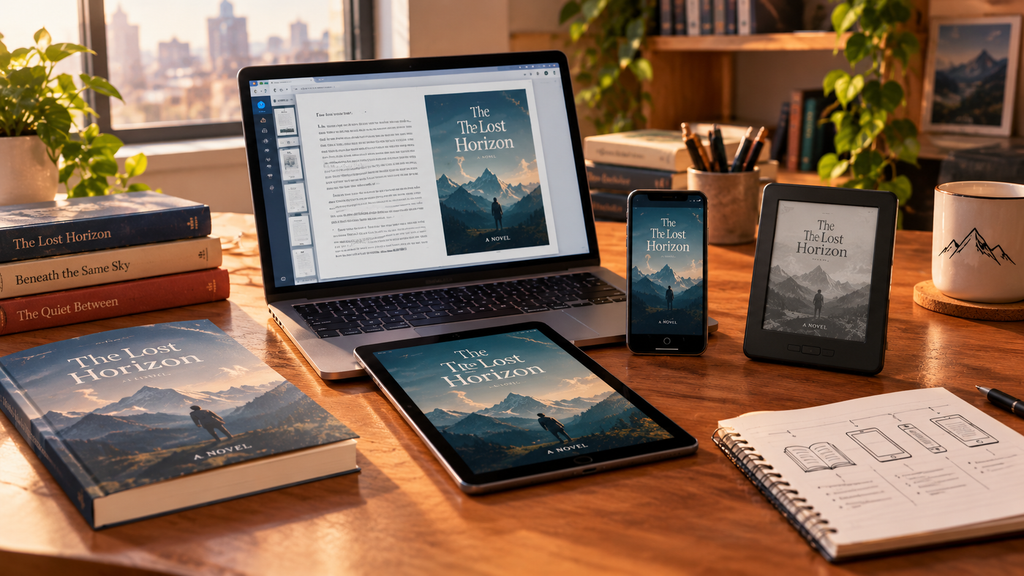
Format choices shape your cost, your royalties, and your reach, so decide before you upload. The main options are ebook, paperback, hardcover, and audiobook.
Many first time authors start with ebook and paperback, because both need no inventory when you print on demand.
Add hardcover and audio later, once sales justify the cost. Production costs real money, which is why Table 5 lists audiobooks only in the premium tier.
Your platform choice matters more than your format choice, because the platform decides who can buy your book.
Table 4 compares two leading platforms.
Table 5 shows what each budget level buys, so you can match your spending to your goals before you commit money.
Read each platform’s current terms before you sign up, since royalty rules and price bands change.
Table 4. Publishing Platforms
| Platform | Primary Strength | Royalty Structure | Distribution Reach |
| Amazon KDP | Kindle store dominance | Up to 70% eBook | Amazon ecosystem |
| IngramSpark | Global bookstore network | 40 to 60% list price | 40,000+ retailers |
Table 5. Self Publishing Cost Tiers
| Tier | Cost Range | What’s Included |
| DIY Self Publishing | $200 to $800 | Own formatting, premade or budget cover, light self proofread, free distribution |
| Professional Self Publishing | $2,500 to $6,000 | Professional copyeditor and proofreader, custom book cover, paid interior formatting software, basic marketing plan |
| Premium Self Publishing | $7,000 to $15,000+ | Deep developmental editing, professional marketing campaigns, audiobooks, bespoke illustrations |
Choose Your Publishing Format and Where You’ll Sell
Name your goal first. A consultant who wants credibility needs a paperback and an ebook.
A novelist chasing readers usually starts with an ebook. Then match platforms to that goal. Amazon KDP reaches the Kindle store directly.
IngramSpark pushes your book to bookstores and libraries through its distribution network. Sell from your own website too, because you keep the customer’s email address and control the price.
How to Decide Between Amazon and Going “Wide”
Going wide means selling through several retailers. Amazon’s KDP Select program asks for 90 days of ebook exclusivity, and in return you get promotional tools and Kindle Unlimited page reads.
Wide distribution reaches Apple Books, Kobo, and other stores but skips those perks. Choose based on your launch plan, not on habit. Pick Amazon exclusive to launch fast, or go wide to build a longer term readership.
Start Simple (or Publish Wide with Less Formatting Work)
Your first book does not need every format and channel. Publish an ebook and a paperback through one platform, learn the process, and expand later.
If you go wide, use an aggregator service to reach several retailers with one upload, which cuts formatting and account work.
Build the interior with free tools such as Reedsy Studio or paid software such as Vellum. Common paperback trim sizes include 5.5 by 8.5 inches and 6 by 9 inches.
GET A BOOK COVER
Readers judge a book by its cover, whatever the proverb says. Your cover appears as a thumbnail on a phone screen, so it must signal your genre at a glance. A weak cover marks a book as amateur, even when the writing is strong.
Budget for a professional and treat the cost as marketing, not decoration.
People Do Judge a Book by Its Cover
Before page one, your cover decides sales. Get a genre-specific, credibility-building cover design from Continental Book Publishers
Get Your Custom CoverGive your designer four things, your genre, three comparable covers, your title, and your subtitle. Then check the technical specs in Table 6 before you upload, because retailers reject files with the wrong size or color profile.
Ebook covers use RGB and print covers use CMYK. Confirm these settings with your printer before you finalize any files. Cover design runs $300 to $1,200, and Table 8 breaks down the major publishing costs.
Ask in writing who owns the final artwork.
Table 6. Cover Assets
| Cover Asset | Recommended Resolution | Color Space Standard |
| eBook Front Cover | 2560 × 1600 pixels (height by width) | RGB profile |
| Print Full Wrap | 300 DPI | CMYK profile |
Invest in a Professional Cover Design
Hire a designer who works in your genre, and check their portfolio for covers that look current. Ask about rights, source files, and revision rounds before you pay.
Premade covers sit at the low end of the price range and suit tight budgets. Custom illustration costs more and gives you a unique look. Never design your cover in a word processor, and never use images you have not licensed for commercial use.
Why Covers Matter to Readers
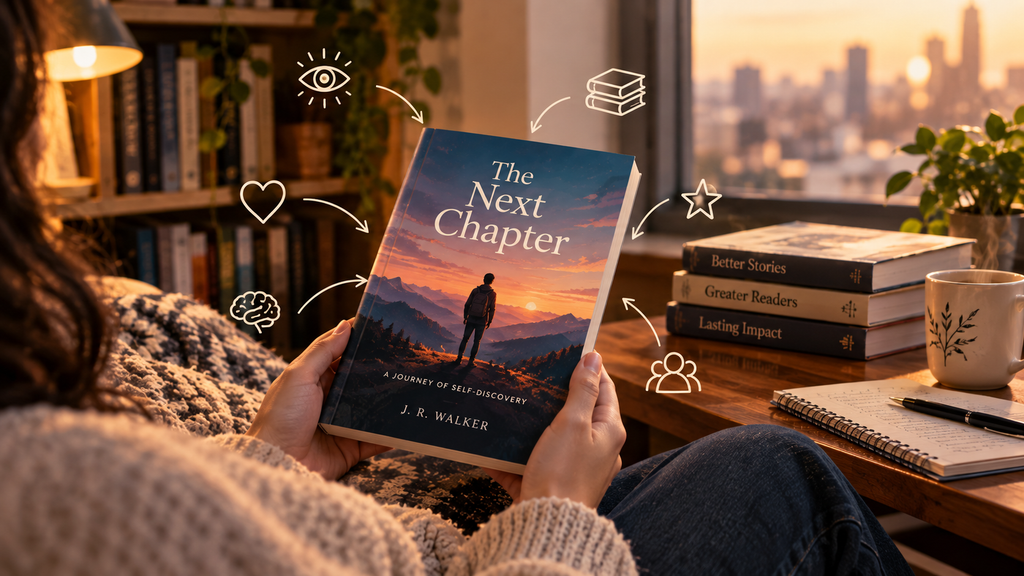
A cover works as a genre signal first and a piece of art second. Thriller readers expect bold type and dark tones.
Romance readers expect bright genre colors and often an illustrated or photographed couple. Break those cues and you confuse the exact buyers you want.
Covers also drive the click from search results to your book page, where the description takes over. Check your cover at thumbnail size before you approve it.
A Real Example of DIY vs. Professional Covers
Run the numbers on a first novel.
A premade cover at the low end of the range costs $300. A custom illustrated cover averages about $930, which leaves a $630 gap.
Price your ebook at $4.99, keep 70 percent, and each sale pays about $3.49 before delivery fees. The better cover must earn about 181 extra sales to close that gap.
Test both designs at thumbnail size with readers from your genre, then back the winner.
UPLOAD AND PUBLISH YOUR BOOK
Upload day rewards preparation. Gather your final manuscript file, cover files, book description, keywords, categories, and ISBN decision before you open the dashboard.
Order a printed proof copy before you approve a paperback, because a screen hides margin, color, and spine problems. Follow each platform’s content rules, including disclosure of AI generated material, which KDP requires.
Protect your rights. Your work carries copyright from the moment you fix it in writing, and registering with the U.S. Copyright Office adds legal remedies if someone copies it. Confirm who owns your ISBN, because the ISBN owner is the publisher of record.
If a book writing company offers to publish for you, get the ownership terms in writing before you sign. Keep every receipt and every contract in one folder. You will need them at tax time.
Table 7 sets length targets for your listing copy, and Table 8 shows what each publishing task costs.
Table 7. Copy Components
| Copy Component | Target Length | Functional Goal |
| Headline Hook | Under 150 characters | Stop the scroll |
| Book Description | 150 to 250 words | Drive purchase decisions |
Table 8. Major Expense Categories
| Category | Cost Range | Details |
| Editing | $1,500 to $5,000 | Varies by word count and whether it’s developmental editing, copyediting, or basic proofreading |
| Cover Design | $300 to $1,200 | Novice and premade designs on the low end, custom professional illustrations average about $930 |
| Formatting | $0 to $1,000 | Free with tools like Reedsy Studio, or paid via software like Vellum, or hire a layout designer |
| ISBN & Registration | $0 to $125+ | Free ISBNs tied to the platform as publisher of record, buying your own via Bowker runs about $125 (US) |
| Marketing | $60 to $2,000+ | Promotional assets, advertising setup, launch strategy, social media ads |
10-TELL EVERYONE
A published book without promotion sits unseen. Start telling people before launch day, not after. Build an email list first, because a newsletter converts far better than social media, as Table 9 shows.
Ask readers from your beta round to post honest reviews in the first week. Never pay for reviews or trade reviews for favors.
Amazon bans it, and the FTC finalized a rule in 2024 that bans fake reviews and testimonials.
Table 9. Marketing Channels
| Marketing Channel | Conversion Benchmark | Primary Focus |
| Author Newsletter | 5 to 10% | Direct launch sales |
| Social Media | 1 to 2% | Brand awareness build |
Your email list must follow the law too. U.S. senders must include an unsubscribe link and a physical mailing address under federal email law, and EU subscribers need valid consent under GDPR.
Use Table 10 to map your launch and Table 11 to track results after it.
Read through rate measures how many readers of book one go on to book two. Return on ad spend equals revenue divided by ad spend, so a 1.5 ratio returns $1.50 for every $1 spent.
Table 10. Launch Phases
| Launch Phase | Timeframe | Main Action |
| Pre Launch | 30 days prior | Review copy distribution |
| Launch Week | Days 1 to 7 | High volume promotion |
Table 11. Growth Metrics
| Growth Metric | Tracking Frequency | Target Indicator |
| Read Through Rate | Monthly | Over 60% series retention |
| Return On Ad Spend | Weekly | Above 1.5 ratio |
11-CELEBRATE!
You finished. You drafted a full manuscript, edited it in passes, tested it with readers, packaged it professionally, and launched it with a plan. That puts you ahead of everyone who only talks about a book at parties.
Take a real break. Order a printed copy and hold it. Sign one for your family. Then write down what you learned, including which beta comment mattered most, what your word count taught you, and what you would change next time.
The best way to learn to write books is to finish one and start the next. Every step in this guide gets easier on the second pass.
As a writing company, Continental Publishers exists to support authors through each stage, from editing and cover design to formatting and launch. When you want a team behind your manuscript, Continental Publishers is ready to work with you.
Closing Thoughts
You now hold the complete map, from your first idea to launch day. Follow these steps, hit your daily target word count, and edit your text without mercy. Writers who show up daily finish their books.
As a dedicated writing company, Continental Publishers guides authors through every single production stage. When you want an experienced team behind your manuscript, Continental Publishers is ready for you.
Frequently Asked Questions
Pick a compelling core idea, set a daily word count goal, and outline your chapters. Turn off your internal editor while drafting.
Focus on how to start writing a book with daily discipline until you complete your initial rough manuscript draft today.
1. First, brainstorm your central idea.
2. Second, build a detailed outline.
3. Third, establish a strict schedule.
4. Fourth, execute raw draft pages.
5. Fifth, revise structural flaws.
6. Sixth, hire professional book writing editors.
7. Seventh, master how to write a book that sells in retail stores.
Yes, you can write a book without prior background or formal credentials. Passion, daily discipline, and research drive success.
You learn narrative mechanics while writing a book by studying strong story arcs, practicing daily, and applying constructive feedback from honest beta readers.
The four key stages include planning, drafting, revising, and publishing. You begin by mapping character arcs.
Next, you tackle how can we write a book by generating raw daily text. Then, you edit prose. Finally, you launch your completed retail product globally.
Beginners often halt drafting to edit early pages, creating endless delay cycles. Other errors include skipping outlines, ignoring target genre expectations, and rushing publication without editing.
Successful authors avoid these traps when they write books with disciplined structure and continuous daily effort.
The four primary styles are expository, descriptive, persuasive, and narrative. Expository explains factual concepts. Descriptive paints vivid sensory imagery. Persuasive convinces audiences directly.
Narrative delivers character driven story arcs. Writers blend these foundational approaches during writing a book to hold reader attention.
Yes, you can use artificial intelligence tools for brainstorming and outlining tasks. Retail stores require content disclosures, and consumers reject unedited text.
You must rewrite AI drafts, inject human voice, and control book writing quality before selling titles on digital platforms successfully.
Earnings vary based on your publishing path. Traditional advances for debuts average $5,000 to $15,000. Independent authors earn 30% to 70% royalties per copy.
Success relies on marketing skills and knowing how to write a book that satisfies active retail market demands.
Stop Dreaming About Your Book. Start Publishing It.
Turn your ideas into professionally edited, market-ready books that sell.
Continental Publishers gives you the strategy, craft, and publishing power to conquer the retail shelf.